
Atlas 6mph Class 3
A practical mobility scooter, best matched to how and where you will use it, held back mainly by a few practical limitations.
An 8mph mobility scooter - a Class 3 scooter - covers more ground, keeps up better on quieter roads and shrinks longer journeys. This guide explains the rules, what to look for, and which faster scooters we rate.
An 8mph (Class 3) scooter suits you if you make longer journeys or need to travel on the road, not just the pavement. By law a Class 3 scooter must be limited to 4mph on the pavement and can do up to 8mph on the road, must be registered with the DVLA, and must have lights, indicators, a horn and a rear-view mirror. Prioritise good range, comfortable suspension and a stable 4-wheel design for road use. Check the official requirements at [gov.uk/mobility-scooters-rules](https: //www.gov.uk/mobility-scooters-and-powered-wheelchairs-rules).
Class 3 scooters are legally invalid carriages that can be used on the road. The key rules: you must be 14 or over, the scooter must be registered with the DVLA (this is free, but it must display a registration), it must be capable of 8mph on the road and 4mph on the pavement, and it must have front and rear lights and reflectors, indicators, a horn and a rear-view mirror. You do not need a driving licence, road tax or insurance by law, but insurance is strongly recommended. You cannot use Class 3 scooters on motorways, in cycle lanes or in bus lanes, and you should avoid dual carriageways where possible (and use an amber flashing light if you do). Always check the current rules at gov.uk before relying on any of this.
On the pavement, a Class 3 scooter must be switched to its 4mph limit - the 8mph setting is for the road only. You can use it on most roads (keeping to the left, like any vehicle), but not on motorways, and not in cycle or bus lanes. Take particular care at junctions and crossings, and remember that other road users may not expect a scooter, so visibility aids and predictable, sensible riding are important.
Many capable Class 3 road scooters are sold through specialist mobility dealers who offer home demonstrations, set-up, DVLA registration help and engineer servicing. For a scooter you will rely on for road use, that support can be worth a great deal, and a try-before-you-buy demonstration helps you judge comfort and control at speed. Where a model is available online we review it, but for top-end road scooters a local dealer is often the better route.
A practical mobility scooter, best matched to how and where you will use it, held back mainly by a few practical limitations.

A practical mobility scooter, best matched to how and where you will use it, held back mainly by a few practical limitations.
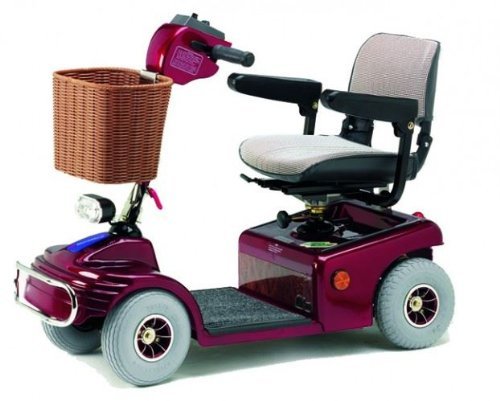
A practical mobility scooter, best matched to how and where you will use it, held back mainly by a few practical limitations.

A practical mobility scooter offering range up to 32 miles, best matched to how and where you will use it, held back mainly by a few practical limitations.

A practical mobility scooter, best matched to how and where you will use it, held back mainly by a few practical limitations.

A practical mobility scooter, best matched to how and where you will use it, held back mainly by a few practical limitations.

A practical mobility scooter, best matched to how and where you will use it, held back mainly by a few practical limitations.

A practical mobility scooter offering range up to 25 miles, best matched to how and where you will use it, held back mainly by a few practical limitations.

A practical mobility scooter offering max user weight. Stone, best matched to how and where you will use it, held back mainly by a few practical limitations.
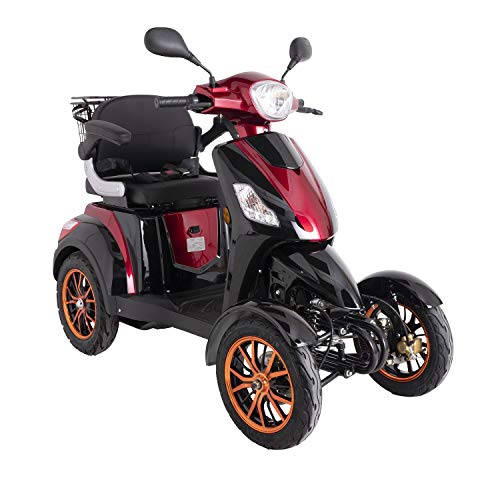
A practical mobility scooter, best matched to how and where you will use it, held back mainly by a few practical limitations.
A Class 3 scooter can travel up to 8mph on the road and must be limited to 4mph on the pavement. It must be registered with the DVLA and fitted with lights, indicators, a horn and a rear-view mirror. You must be 14 or over to use one. Always check the current rules at gov.uk.
Insurance is not a legal requirement for any mobility scooter in the UK, but it is strongly recommended for an 8mph Class 3 scooter used on the road, covering theft, damage and third-party claims. You do not need a driving licence or road tax, but the scooter must be registered with the DVLA.
Yes, but it must be switched to its 4mph limit on the pavement; the 8mph setting is for the road only. Class 3 scooters can also be used on most roads but not on motorways, in cycle lanes or in bus lanes. Take extra care at crossings and junctions.
Our top pick is the Atlas 6mph Class 3 (our score 9.0/10) - A practical mobility scooter, best matched to how and where you will use it, held back mainly by a few practical limitations..