
Auto-Folding Lightweight Scooter 24kg
A practical mobility scooter offering folds for transport, best matched to how and where you will use it, held back mainly by the lifting weight some users will find heavy.
A little regular care keeps a mobility scooter safe, reliable and lasting longer. This guide covers the battery, tyres and general upkeep that prevent most problems.
Keep a scooter in good shape by looking after the battery, keeping tyres correct, checking the brakes and lights, and keeping it clean and dry. The battery is the most important and costly part, so good charging habits matter most. Most upkeep is simple, and a quick regular check prevents the breakdowns and safety issues that catch people out.
The battery is the priciest component, so treat it well. Charge it regularly rather than running it flat, use the correct charger, and store the scooter somewhere cool and dry, not freezing. If you will not use it for a while, follow the maker's guidance on charging during storage. Batteries lose capacity with age, so expect to replace them every few years as range drops.
Check tyres for wear, pressure (if pneumatic) and damage, since they affect safety, comfort and range. Test the brakes regularly - scooters have safety braking systems that must work reliably. Keep an eye on lights and indicators (especially on Class 3 scooters), making sure they are clean and working. These are the safety-critical items to stay on top of.
Wipe the scooter clean and keep it dry, avoiding water near electrical parts and the battery. Store it in a dry, sheltered place out of the weather, which protects the electronics, frame and battery. A cover helps if it must be outside. Damp and cold are the main enemies of a scooter's reliability and battery life, so dry storage pays off.
Do a quick visual check before journeys - tyres, brakes, lights, battery charge - and have the scooter serviced periodically by a mobility dealer, especially for anything beyond basic care. Keep connections clean and bolts secure. Following the maker's servicing guidance keeps the scooter safe and reliable and helps preserve any warranty.
A practical mobility scooter offering folds for transport, best matched to how and where you will use it, held back mainly by the lifting weight some users will find heavy.

A practical mobility scooter, best matched to how and where you will use it, held back mainly by a few practical limitations.
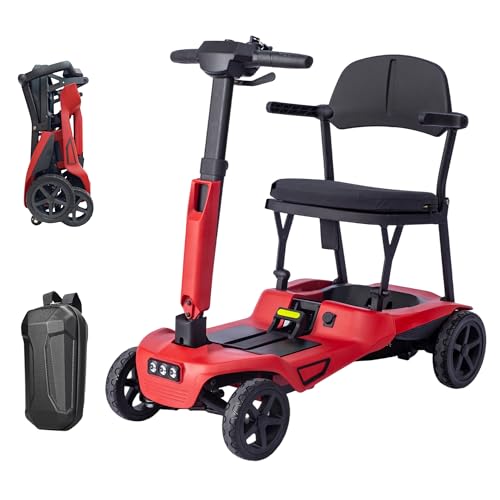
A practical mobility scooter offering range up to 10 miles and folds for transport, best matched to how and where you will use it, held back mainly by the lifting weight some users will find heavy.
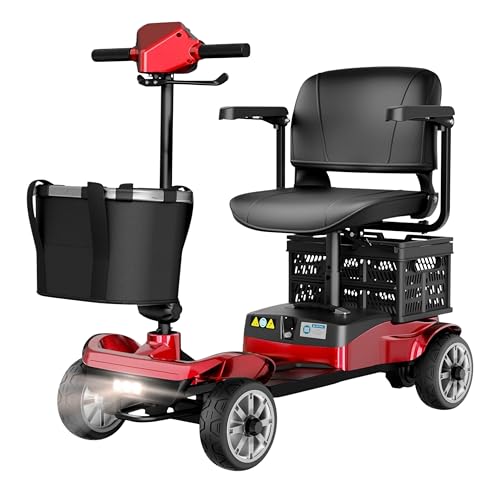
A practical mobility scooter offering range up to 13.75 miles and max user weight 135 kg, best matched to how and where you will use it, held back mainly by a few practical limitations.
Look after the battery, keep tyres and brakes in good order, check the lights, and keep the scooter clean and dry. The battery is the most important part, so charge it regularly and store the scooter somewhere cool and dry.
Charge it regularly rather than running it flat, use the correct charger, and store the scooter cool and dry, not freezing. Batteries lose capacity with age, so expect to replace them every few years as range drops.
Do a quick visual check before journeys and have it serviced periodically by a mobility dealer, following the maker's guidance. Regular servicing keeps it safe and reliable and helps preserve any warranty.
Our top pick is the Auto-Folding Lightweight Scooter 24kg (our score 9.6/10) - A practical mobility scooter offering folds for transport, best matched to how and where you will use it, held back mainly by the lifting weight some users will find heavy..