
Auto-Folding Lightweight Scooter 24kg
A practical mobility scooter offering folds for transport, best matched to how and where you will use it, held back mainly by the lifting weight some users will find heavy.
Choosing a mobility scooter comes down to class, wheels, range and how you will use it. This guide explains the key decisions - Class 2 vs 3, three vs four wheels, range and portability - in plain English.
Match the scooter to your needs: Class 2 (4mph) for pavements or Class 3 (8mph) for roads, three wheels for tight turning or four for stability, with enough range, a suitable weight capacity, and a comfortable seat. If you need to transport it, choose a travel or folding model. Where and how you ride matters far more than headline features, so start there.
This is the first decision. Class 2 scooters do up to 4mph, are for pavements and shops, and need no registration. Class 3 scooters do up to 8mph, can be used on the road, have lights and indicators, and must be registered with the DVLA. Choose Class 2 for local pavement use, Class 3 for longer journeys or roads where there is no pavement.
Three-wheel scooters turn more tightly, suiting indoor use, shops and tight spaces. Four-wheel scooters are more stable on slopes, kerbs and uneven ground, suiting outdoor and faster use. Think about whether you ride mostly indoors and in tight spaces (three wheels) or outdoors on varied ground (four wheels).
These determine how usable the scooter is day to day.
If you need to take the scooter in a car, you need a travel scooter that folds or dismantles, or an auto-folding model if lifting is hard. Check the folded size against your boot and the weight of the heaviest piece you must lift. If the scooter stays at home, you can prioritise range, comfort and stability over portability.
A practical mobility scooter offering folds for transport, best matched to how and where you will use it, held back mainly by the lifting weight some users will find heavy.

A practical mobility scooter, best matched to how and where you will use it, held back mainly by a few practical limitations.
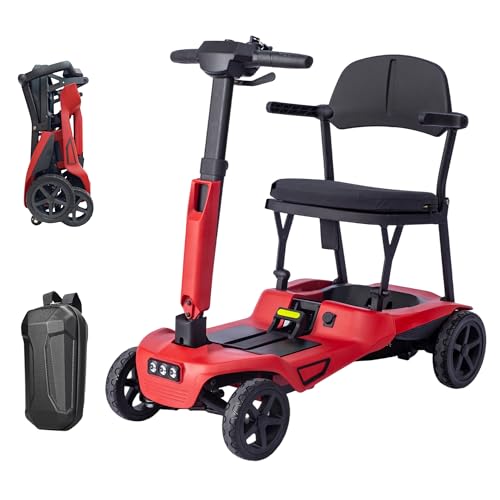
A practical mobility scooter offering range up to 10 miles and folds for transport, best matched to how and where you will use it, held back mainly by the lifting weight some users will find heavy.
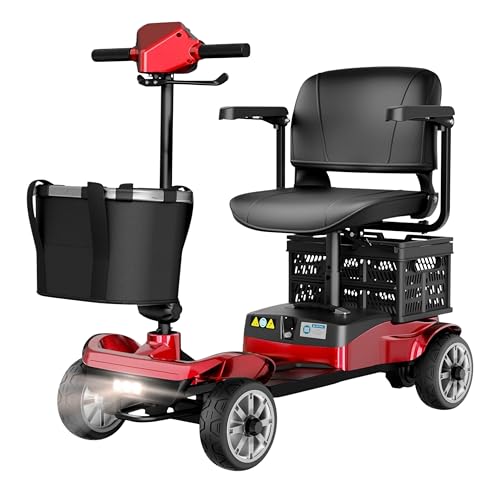
A practical mobility scooter offering range up to 13.75 miles and max user weight 135 kg, best matched to how and where you will use it, held back mainly by a few practical limitations.

A practical mobility scooter offering folds for transport, best matched to how and where you will use it, held back mainly by the lifting weight some users will find heavy.

A practical mobility scooter offering range up to 12.5 miles, best matched to how and where you will use it, held back mainly by a few practical limitations.
Match it to your needs: Class 2 (4mph) for pavements or Class 3 (8mph) for roads, three wheels for tight turning or four for stability, with enough range, a suitable weight capacity and a comfortable seat. Add portability if you transport it.
Class 2 does up to 4mph for pavements and needs no registration; Class 3 does up to 8mph, can be used on the road with lights and indicators, and must be registered with the DVLA. Choose by where you ride.
Start with where and how you will ride - pavement or road, indoors or outdoors, local or longer journeys - then pick the class, wheels, range and portability to match, ensuring a comfortable seat and suitable weight capacity.
Our top pick is the Auto-Folding Lightweight Scooter 24kg (our score 9.6/10) - A practical mobility scooter offering folds for transport, best matched to how and where you will use it, held back mainly by the lifting weight some users will find heavy..