
Auto-Folding Lightweight Scooter 24kg
A practical mobility scooter offering folds for transport, best matched to how and where you will use it, held back mainly by the lifting weight some users will find heavy.
Mobility scooters in the UK fall into two legal classes, and which you choose affects where you can ride and whether you must register. This guide explains Class 2 and Class 3 in plain English.
Class 2 scooters do up to 4mph and are for pavements (and shops), and need no registration. Class 3 scooters do up to 8mph for road use (4mph on pavements), have lights, indicators and a horn, and must be registered with the DVLA. Choose Class 2 for local pavement journeys and Class 3 for longer trips or roads without pavements.
Class 2 scooters are limited to 4mph and intended for pavements and indoor use like shops. They are typically smaller, lighter and often portable, and they do not need to be registered, taxed or insured (though insurance is still recommended). For most users who travel locally, around the shops and on pavements, a Class 2 scooter is all they need.
Class 3 scooters can do up to 8mph on the road and must drop to 4mph on pavements (via a speed switch). By law they must have lights, indicators, a horn, a rear-view mirror, and be registered with the DVLA (registration is free; no road tax or test). They are larger and suit longer journeys and roads where there is no pavement.
Choose Class 2 if you travel short, local distances on pavements and in shops - it is simpler, cheaper and needs no registration. Choose Class 3 if you need to use roads (for example where pavements are missing), travel longer distances, or want the faster 8mph speed. Many users find Class 2 covers their needs; Class 3 is for road use and range.
Riders of both classes must be 14 or over. Neither requires a driving licence. Scooters must give way to pedestrians on pavements, and Class 3 scooters must follow the rules of the road when on the road (but cannot use motorways). Always check the current official guidance at gov.uk, as this is a summary and rules can change.
A practical mobility scooter offering folds for transport, best matched to how and where you will use it, held back mainly by the lifting weight some users will find heavy.

A practical mobility scooter, best matched to how and where you will use it, held back mainly by a few practical limitations.
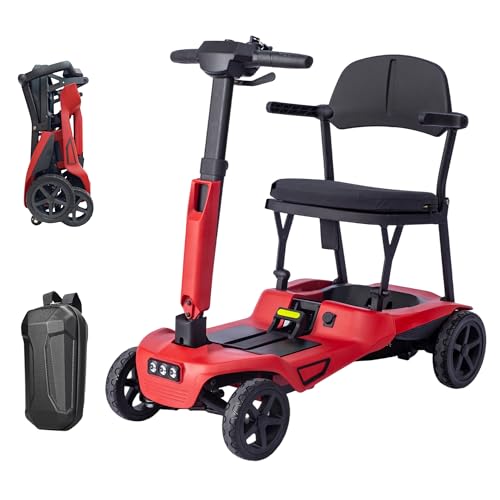
A practical mobility scooter offering range up to 10 miles and folds for transport, best matched to how and where you will use it, held back mainly by the lifting weight some users will find heavy.
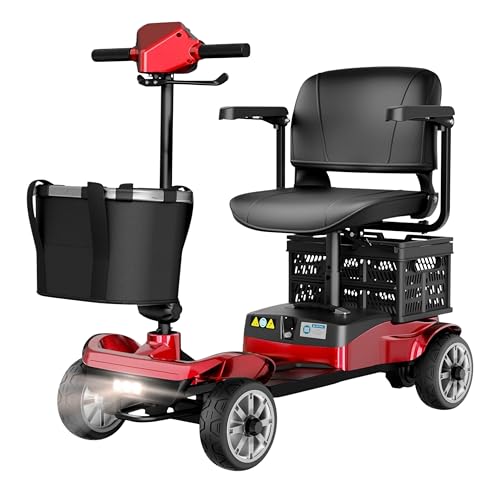
A practical mobility scooter offering range up to 13.75 miles and max user weight 135 kg, best matched to how and where you will use it, held back mainly by a few practical limitations.

A practical mobility scooter offering folds for transport, best matched to how and where you will use it, held back mainly by the lifting weight some users will find heavy.

A practical mobility scooter offering range up to 12.5 miles, best matched to how and where you will use it, held back mainly by a few practical limitations.
Class 2 does up to 4mph for pavements and needs no registration; Class 3 does up to 8mph for roads (4mph on pavements), has lights and indicators, and must be registered with the DVLA. Choose by where you ride.
Only Class 3 (8mph road) scooters must be registered with the DVLA, which is free with no road tax or test. Class 2 (4mph pavement) scooters need no registration.
Only a Class 3 scooter can be used on the road (not motorways), and it must be DVLA-registered with lights and indicators. Class 2 scooters are for pavements and shops only.
Our top pick is the Auto-Folding Lightweight Scooter 24kg (our score 9.6/10) - A practical mobility scooter offering folds for transport, best matched to how and where you will use it, held back mainly by the lifting weight some users will find heavy..